
Travellers and dreamers
Cities with their story, their map and what to see, before you go or instead of going.

Ordinis Atlas
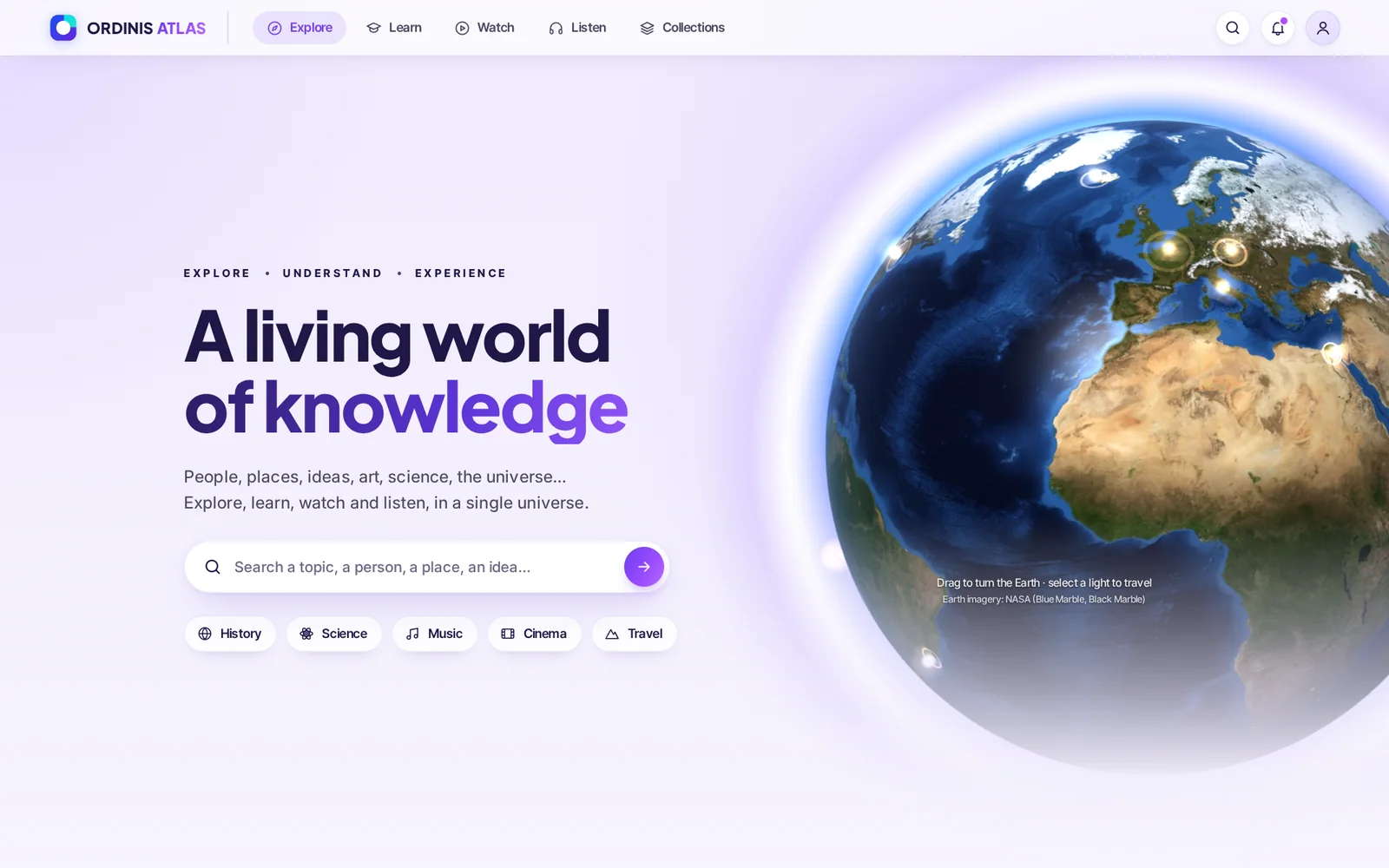
People, places, ideas, art, science and the universe, all in one place. Turn the Earth by hand, walk through a city on its map, press play on a symphony or set the planets in motion. In English and French, in your browser.
Who it’s for
Cities with their story, their map and what to see, before you go or instead of going.
Complete reference libraries in English and French, with the source and date of every page.
Pages that play the music, show the art and set the planets in motion.
Explore
The home page opens on a 3D Earth you can drag and spin. One search finds places, people, artworks and ideas, in English or French.
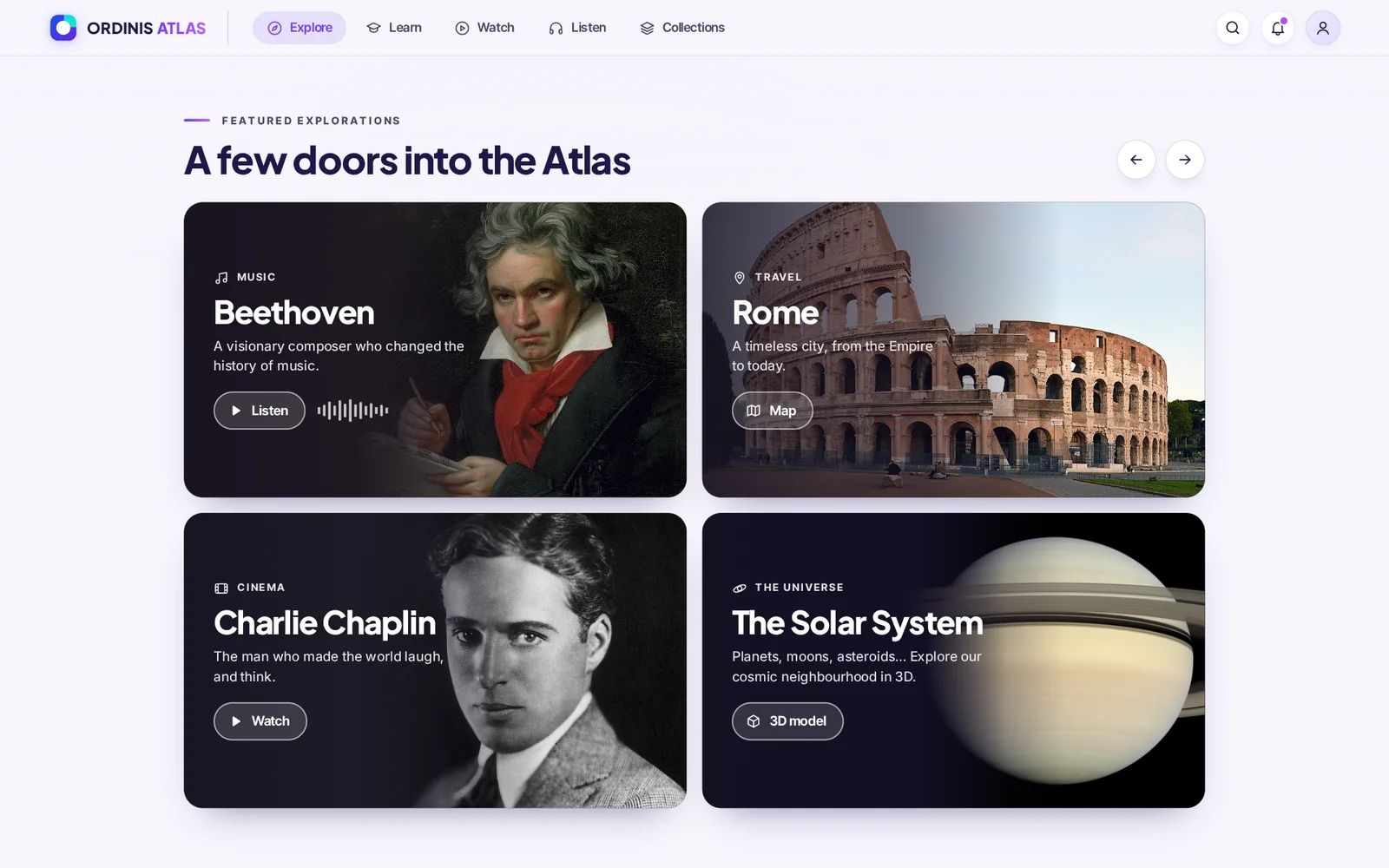
Hand-picked doors open the way in: Beethoven, Rome, Charlie Chaplin, the Solar System, the minds that changed the world and the wonders worth the journey.
Places
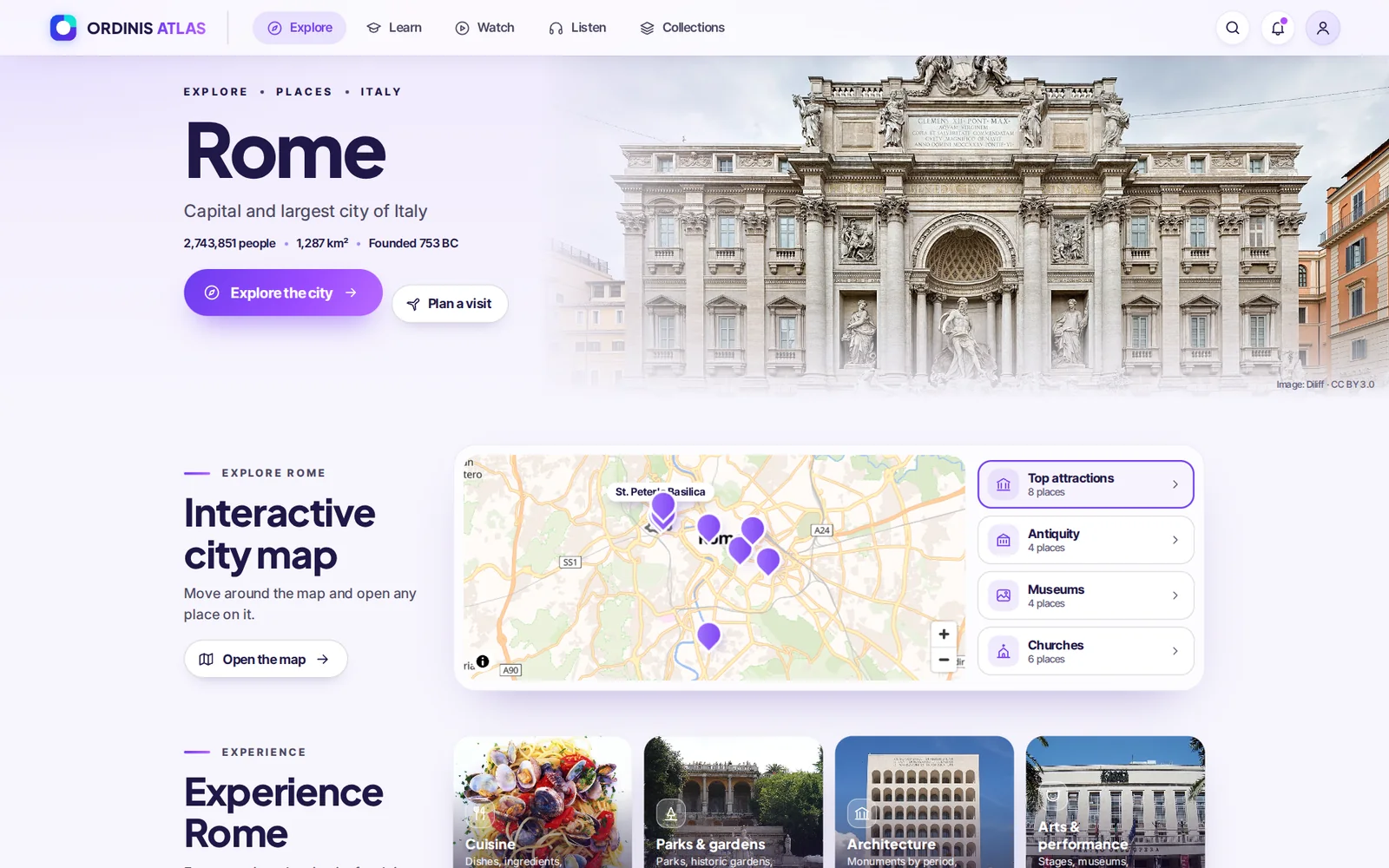
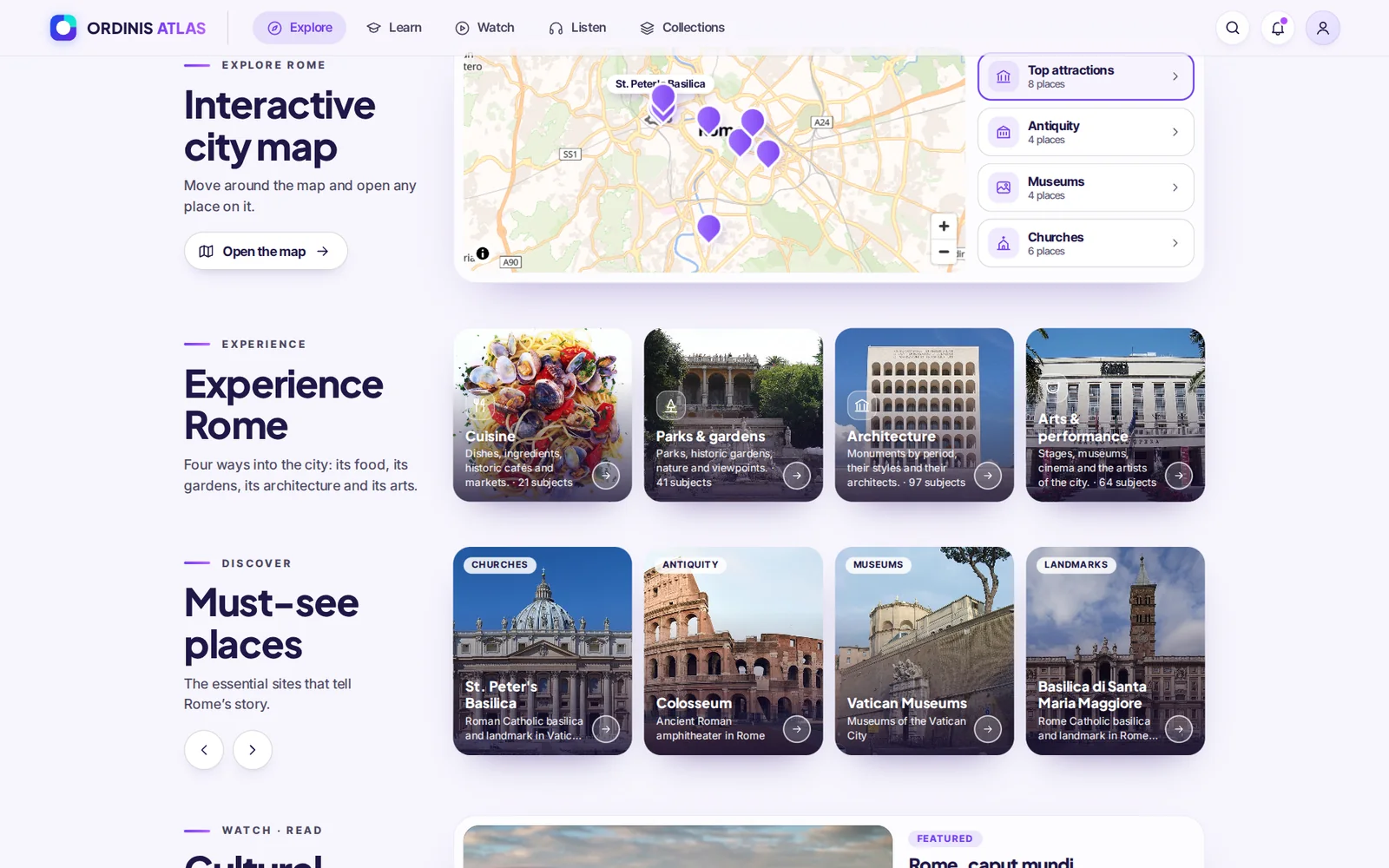
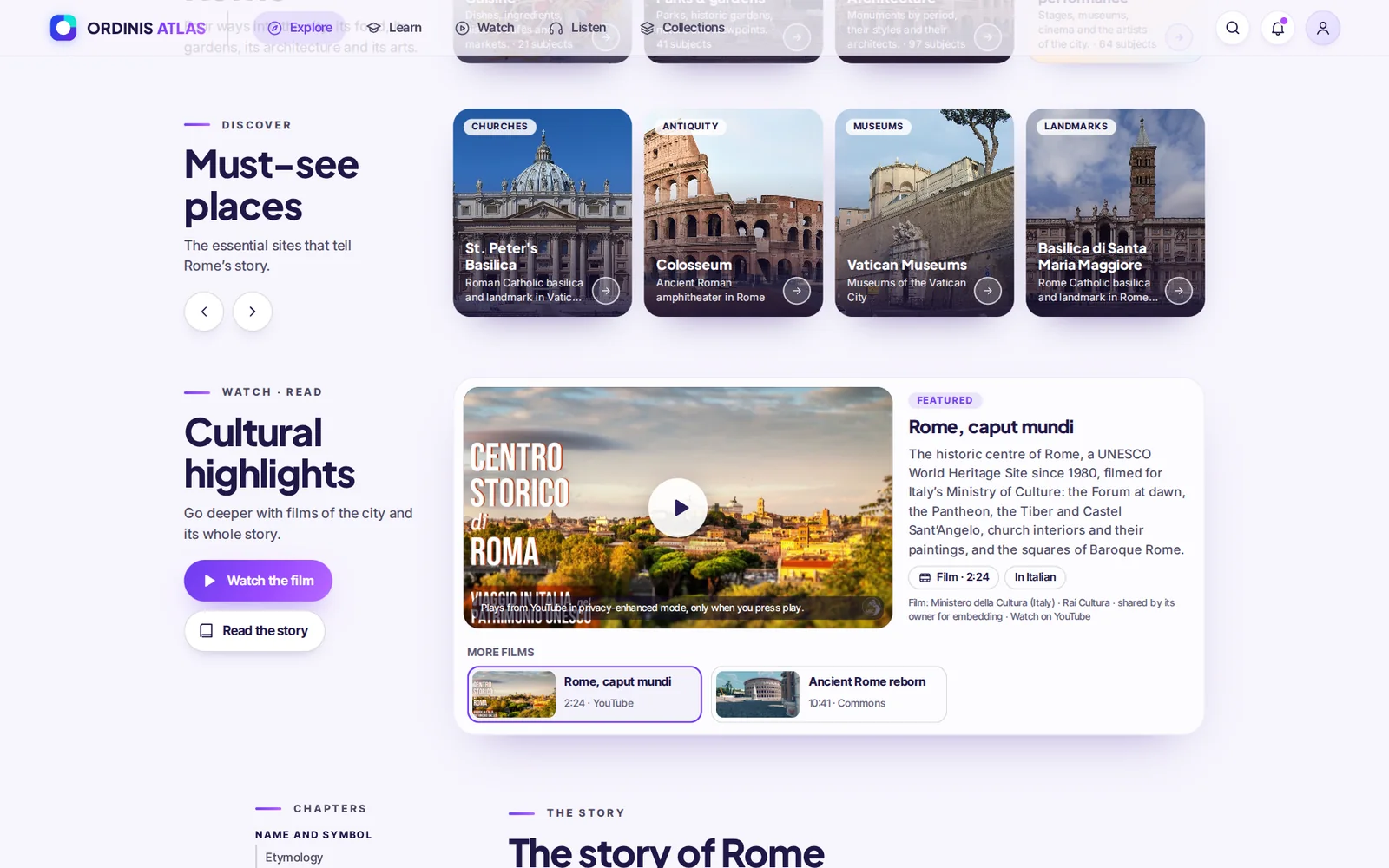
A city page is a guide and an encyclopedia at once: its story, its map, how to get there and what to see.
People and science
Each knowledge page is built around what makes its subject unique.
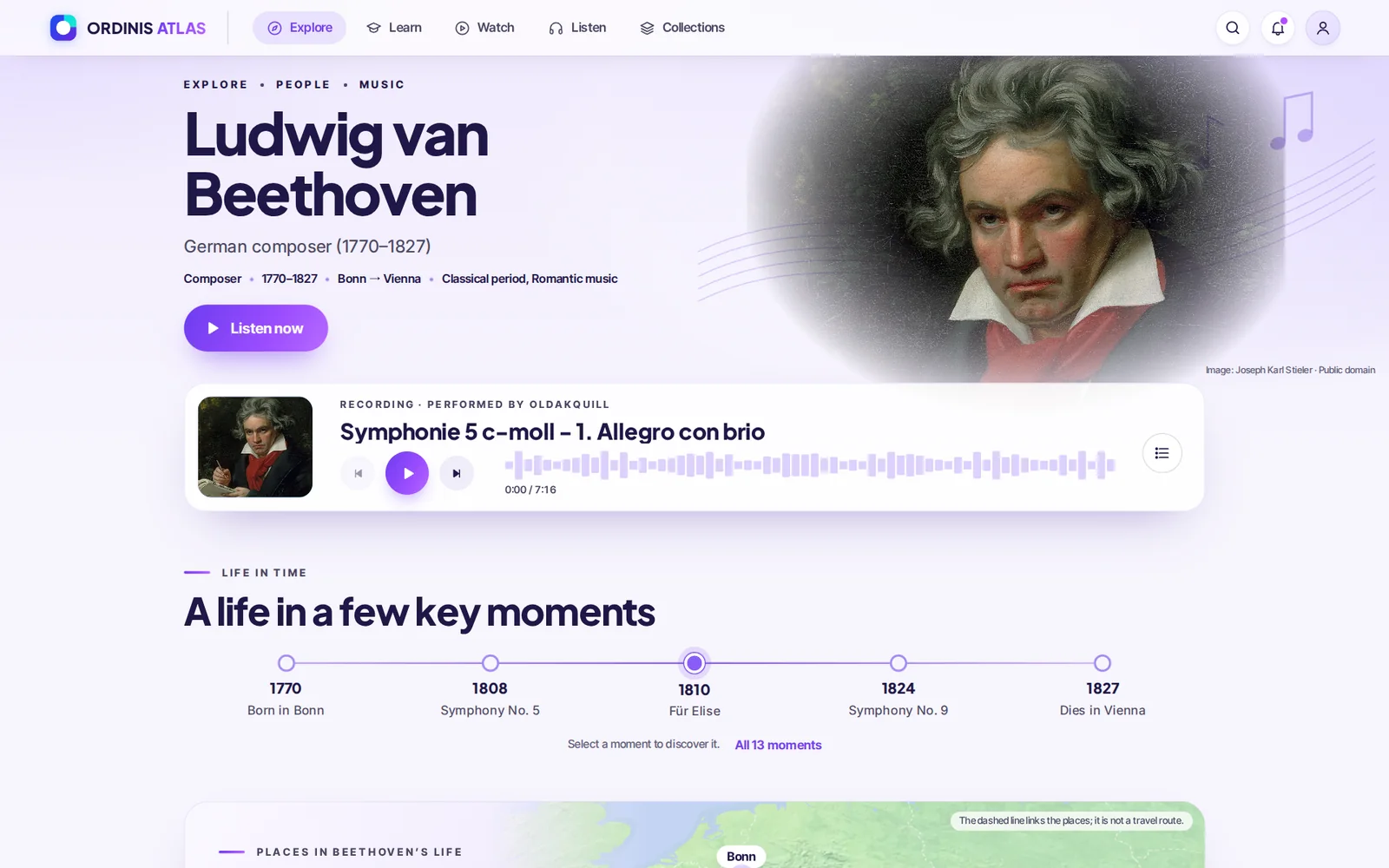
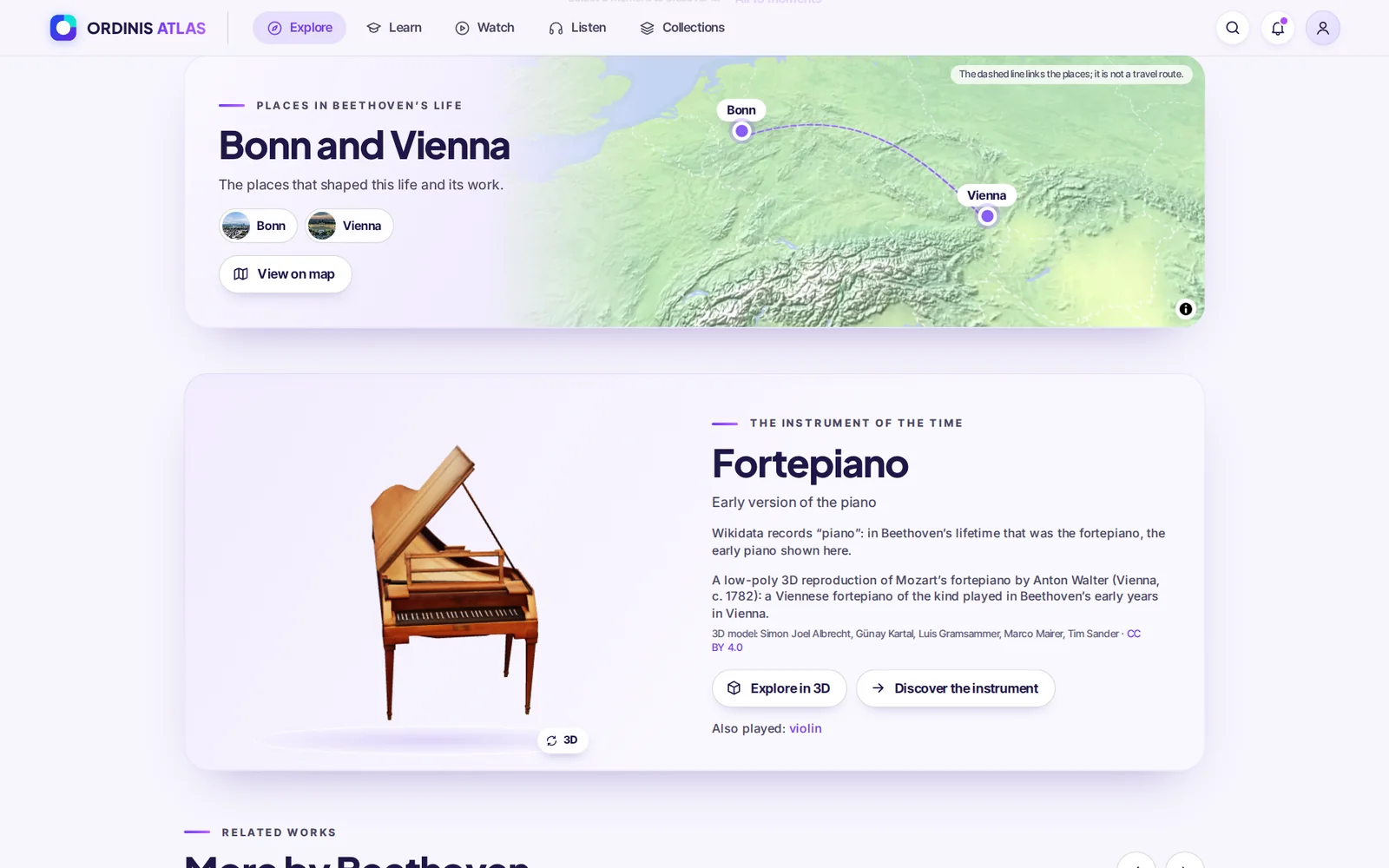
A composer’s page plays his music: Beethoven’s opens with a public-domain recording, his life in a few key moments, the places he lived on a map, and the instrument of his time in 3D.
Places, instruments and works connect to their own pages, so one subject leads naturally to the next.
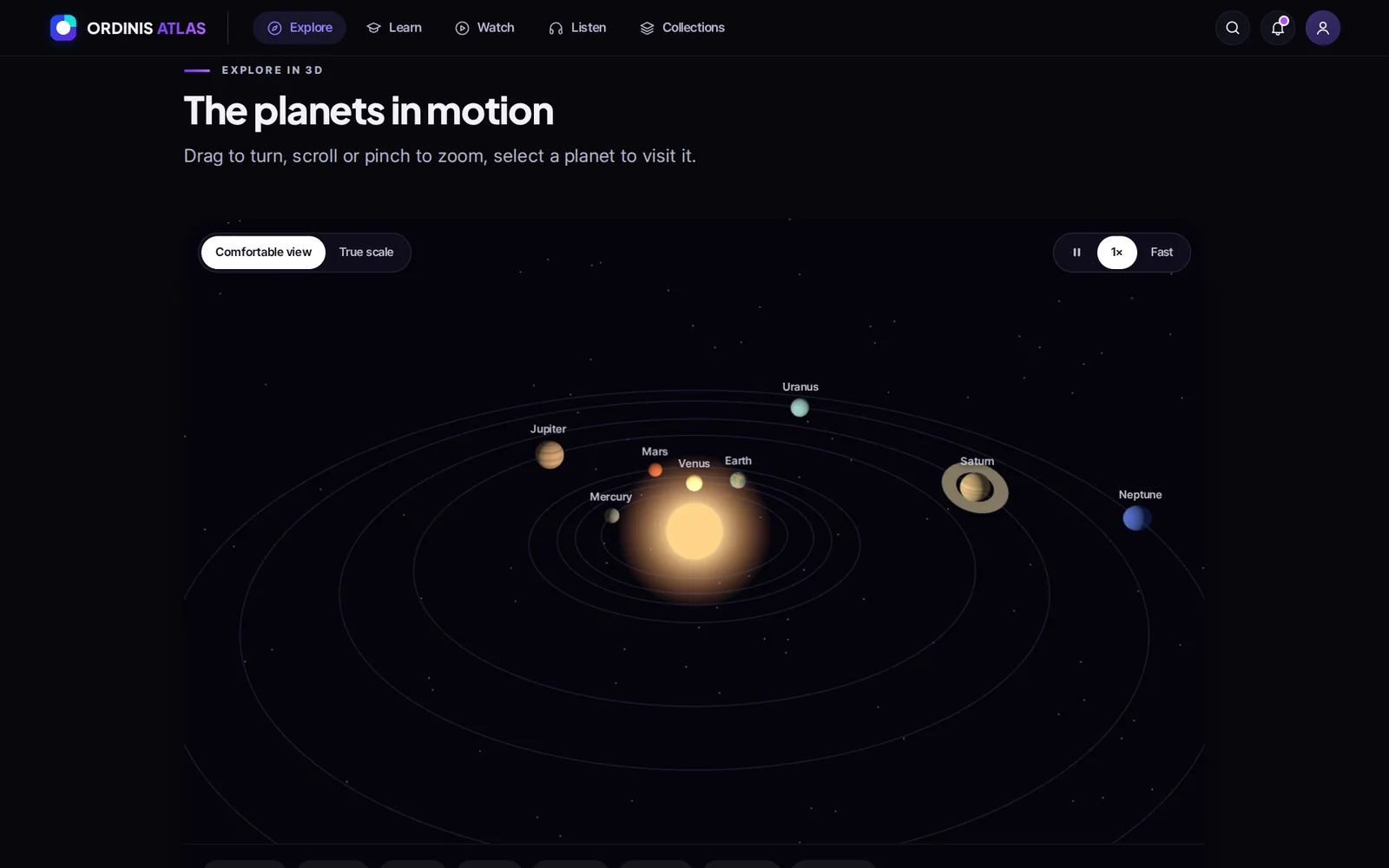
The Solar System page sets the planets moving on their orbits. Drag to turn it, scroll to zoom, select a planet to visit it.
The Time Explorer zooms from billions of years down to single days, and every event opens its page.
Every page and every screen of the Atlas in both languages.
The library
Behind the knowledge pages sit complete dated copies of five Wikimedia projects in both languages, readable in the same layout and searchable in one place.
Matching titles appear almost at once; full-text results across every collection follow, grouped by collection.
Library pages open in the Atlas reader, with contents, an at-a-glance panel and the snapshot date.
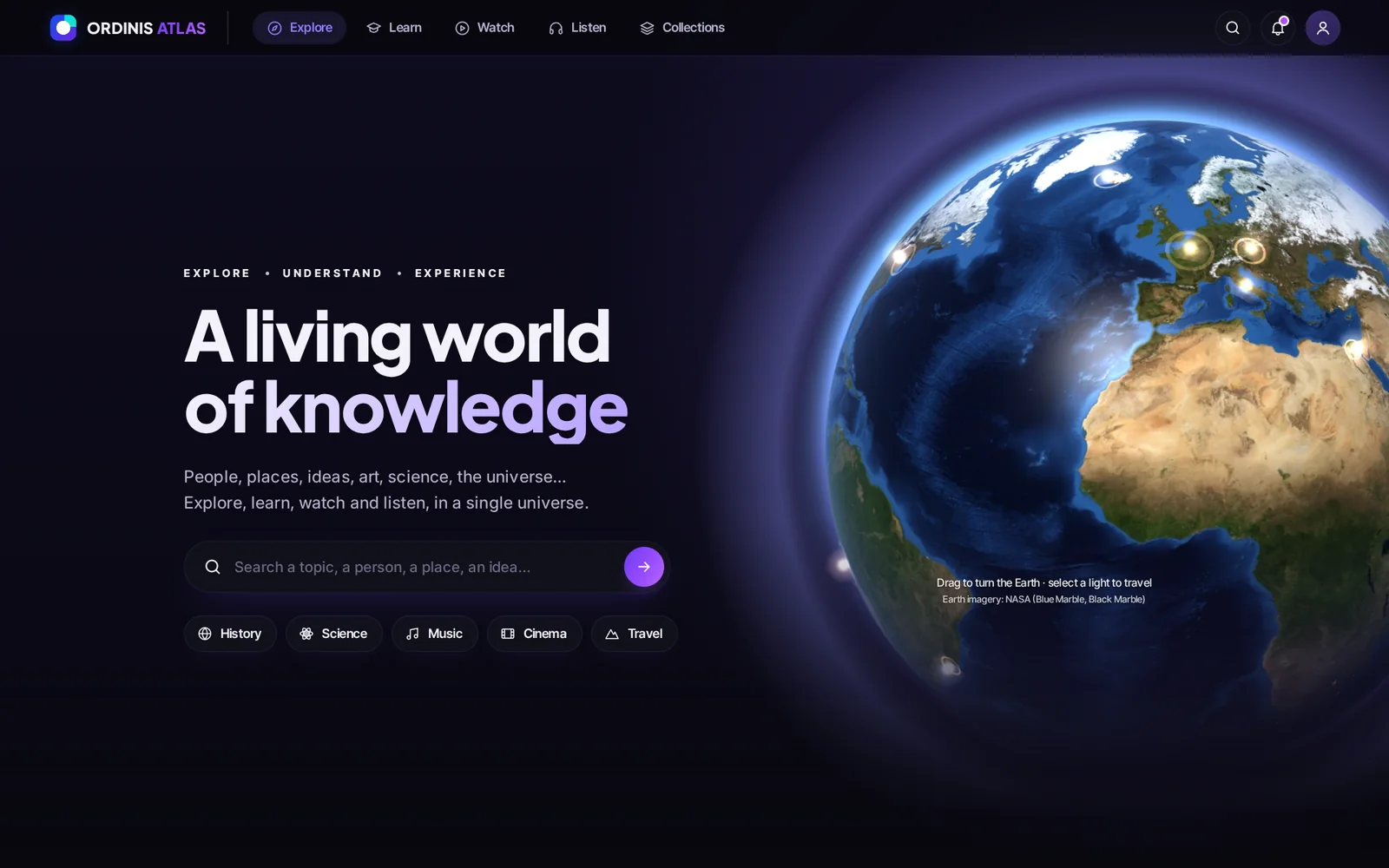
A light design first and a complete dark mode.
Sources
Library collections are copies made on a stated date. The reader shows the snapshot date and source on every page.
Images and recordings come from open sources such as Wikipedia, Wikidata, Wikimedia Commons and NASA, each with its credit and licence.
Each archive is admitted only after its checksum matches the one its publisher lists.
Wikipedia and the other Wikimedia projects are written by their volunteer contributors. Ordinis Atlas is not affiliated with or endorsed by the Wikimedia Foundation.
Under the hood
Ordinis Atlas is open source under the GNU Affero General Public License v3.0 (AGPL-3.0).
A web app at atlas.ordinisonline.com: nothing to install. The 3D Earth, maps and timeline run in the browser.
Built from open sources such as Wikipedia, Wikidata, Wikimedia Commons and NASA, with each image’s credit and licence.
Dated copies of five Wikimedia projects in English and French, each admitted only after its checksum matches the publisher’s.
Platforms
Part of the family
Belgian place pages show the latest Belgium Pulse news about that place, and Belgium Pulse links to Atlas from every page.
Ordinis Atlas is on the Ordinis OS dock.
Recent milestones
Support us
Ordinis is independent. If an app helps you, you can support its development.
Support usPayments are handled securely by Stripe.
Explore the family

News from Belgium with context, in English, French and Dutch, written by AI from cited public sources and published only after automated checks. With What’s On & Expat.

Finds the checkable claims on the page you are reading, gathers public sources, and shows what they do and do not support.

A Chromium-based browser with tracker blocking, Tor windows and Ordinis Lens built in, in six languages.
