
Three languages, one story
Read the same story in English, French or Dutch, with the same facts in each.

Belgium Pulse · an Ordinis newsroom
Belgium Pulse is an AI newsroom. Every article is written by AI from the public sources it cites, in English, French and Dutch, and is published only after automated checks of its sources, figures, names, language and facts.
The Belgium Pulse family
News from Belgium with context, in English, French and Dutch, written by AI from cited public sources and published after automated checks.

Concerts, stage, markets, walks, exhibitions and places to visit across Belgium, plus the films now showing and coming soon, every listing linked to its official source.

Plain-language guides for moving to and living in Belgium: registration, residence, housing, healthcare, work, school and everyday life, each built only on official sources. Guides in English.
Who it’s for
Read the same story in English, French or Dutch, with the same facts in each.
Articles explain the background, what happens next and who is involved, where the sources support it.
Every article lists the sources it was written from, with links, so you can read the originals.
What you get
Headlines from Belgium, Brussels, Flanders and Wallonia, Europe and the world, the economy, justice, technology, sport and health. New stories are published several times a day.
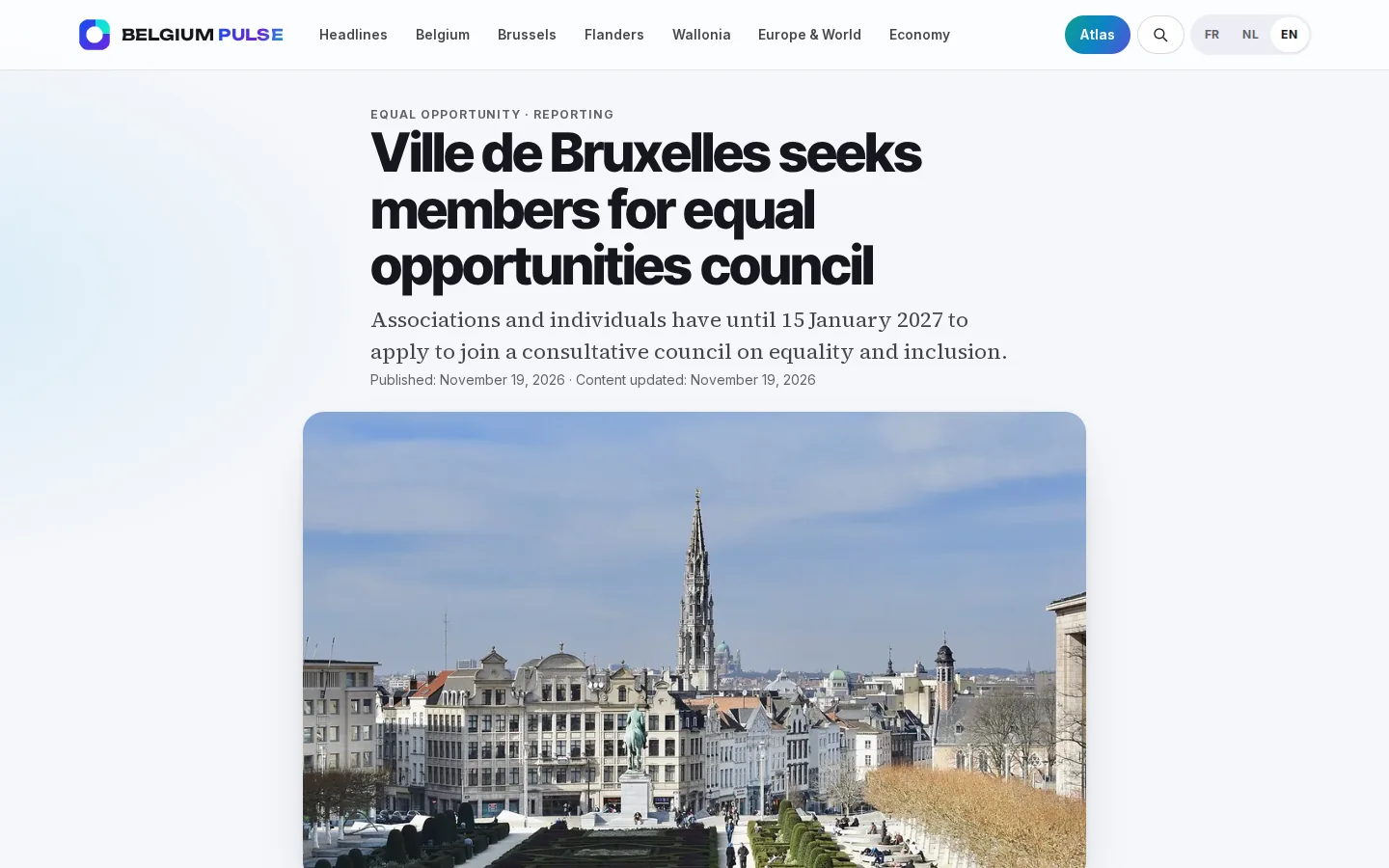
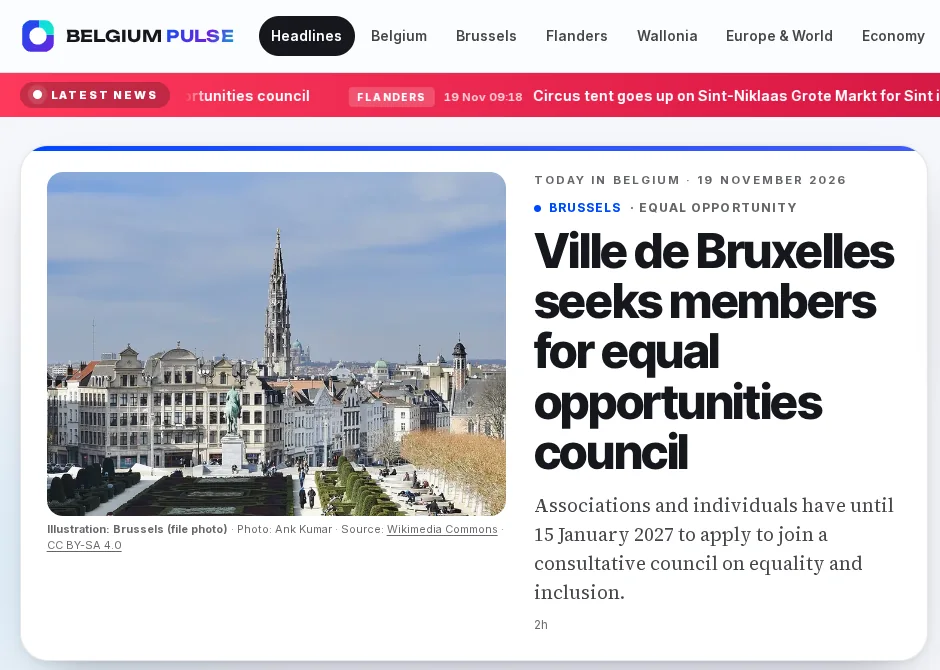
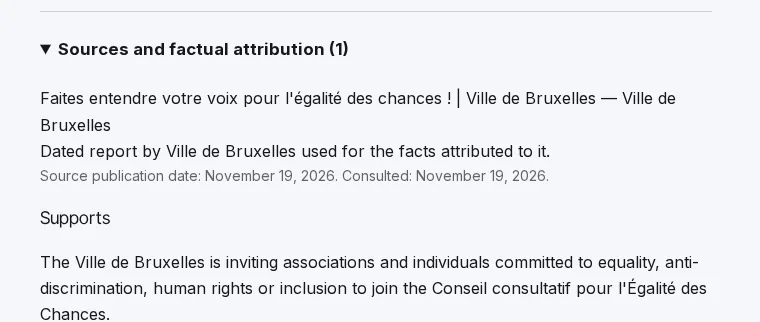
Each article ends with its sources and what was taken from each: the publisher, the title and a link to the original.
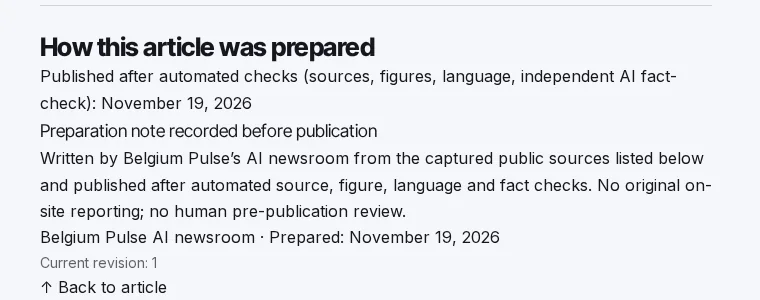
At the bottom of each article: “Written by Belgium Pulse’s AI newsroom from the captured public sources listed below and published after automated source, figure, language and fact checks. No original on-site reporting; no human pre-publication review.”
Under the hood
The newsroom runs on its own, several times a day. Software selects, writes and checks; it publishes only what passes every check.
Current Belgian stories are picked from the news, ranked by significance and relevance to Belgium.
The public sources for each story, such as VRT NWS, RTBF or La Libre Belgique, are saved with their dates.
An AI model writes the article from those sources only, in English, French and Dutch, with background and context where the sources support it.
Automated gates check the sources, every figure and name, the language, the scope and the image rights, and a separate AI pass fact-checks the result.
Only articles that pass every gate are published, with the decision recorded as automated, never as a human one.
Corrections and withdrawals are logged publicly; an article can be withdrawn at any time.
The checks
If any check fails, the story is not published.
Every story starts from public sources that are saved with their date before anything is written.
Every number and every name in the article must appear in those sources.
A separate AI pass compares the finished article, in all three languages, with the sources.
The English, French and Dutch versions must each pass a language check and be long enough to inform.
Structure, attribution and tone follow the newsroom’s written rules.
The story must belong to a Belgian section, and must not repeat one already published.
Stories that touch sensitive matters are held back unless the check passes.
An image is used only with its credit; otherwise the article runs without one.
Privacy and security
Belgium Pulse does not build behavioural profiles of its readers.
Only aggregate page views and clicks are counted, without cookies, IP addresses, browser details or reader identifiers.
Every article can be read without signing in.
Platforms
Part of the family
Belgian place pages in Ordinis Atlas show the latest Belgium Pulse news about that place, and Belgium Pulse links to Atlas from every page, so a story leads to the knowledge behind it.
Like Ordinis Lens, Belgium Pulse shows its sources and is open about what AI did.
Recent milestones
Support us
Ordinis is independent. If an app helps you, you can support its development.
Support usPayments are handled securely by Stripe.
Explore the family

An encyclopedia you can explore by place, time and topic: a 3D globe, a timeline, illustrated articles and complete English and French reference libraries, with the source of every page shown.

Finds the checkable claims on the page you are reading, gathers public sources, and shows what they do and do not support.

A Chromium-based browser with tracker blocking, Tor windows and Ordinis Lens built in, in six languages.